
Seinen Manga and the Psychology of Risk: Why Readers Love High-Stakes Stories
Seinen manga often works best when the danger is not only physical. A fight can be exciting, but a decision made under pressure can be even sharper: one wrong move, one badly timed bluff, one emotional reaction — and the character loses money, status, freedom or the last chance to stay in control.
That is why high-stakes stories are so powerful in seinen. They turn risk into a way of studying people. The reader is not just asking who will win, but why someone keeps going when the odds are bad, why pride becomes more dangerous than the opponent, and why a calm face can hide panic better than any action scene.
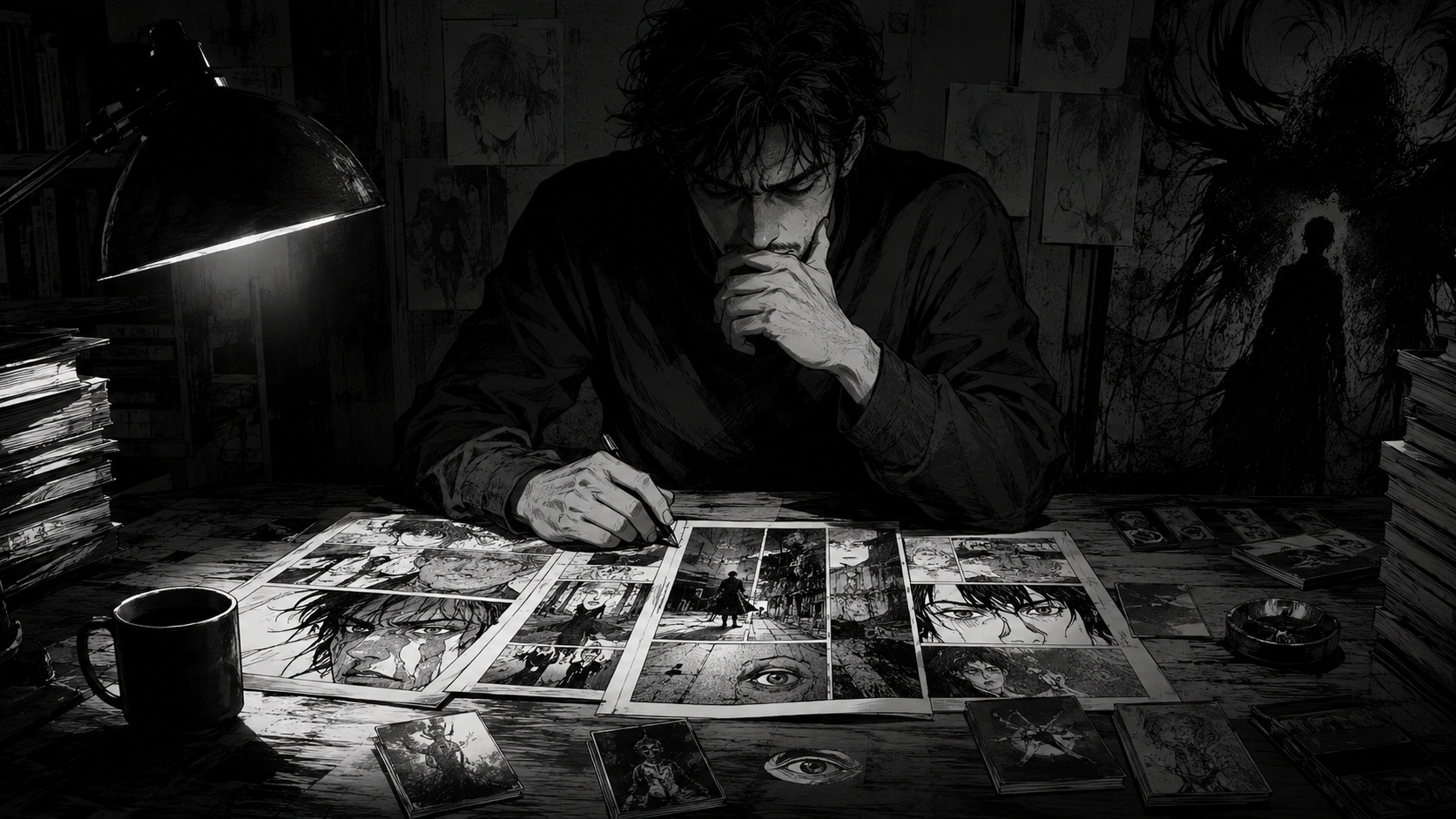
Risk makes characters easier to read
In everyday life, people can hide behind routine. In high-stakes manga, that protection disappears. A character who seems confident at the beginning of a game may become reckless when money is involved. Another who looks weak may turn out to be patient, observant and hard to manipulate.
This is why games, bets and psychological contests fit seinen so well. They compress personality into action. Instead of explaining a character for several chapters, the author can place them in a room where every decision costs something. What they choose under pressure tells the reader more than a long biography.
The best scenes are rarely about luck alone. They are about how a person reacts to uncertainty: whether they read the room, control their breathing, watch the opponent's hands, or let fear push them into a bad move.
Bluffing turns dialogue into combat
Many seinen stories use bluffing because it makes conversation feel dangerous. A character can lie, stay silent, reveal half of the truth or pretend to be cornered. The tension comes from the gap between what is said and what is actually happening.
This creates a different kind of battle. Nobody has to throw a punch. A pause, a smile, a repeated phrase or a sudden change in tone can become the equivalent of an attack. Readers start looking for small signals: who is overacting, who is too calm, who is pretending not to notice something obvious.
That is also why game-based manga often rewards rereading. Once the result is known, earlier scenes look different. A minor gesture becomes a clue. A casual line turns into a trap. The pleasure is not only in the twist, but in realizing that the author placed the answer in front of the reader from the start.
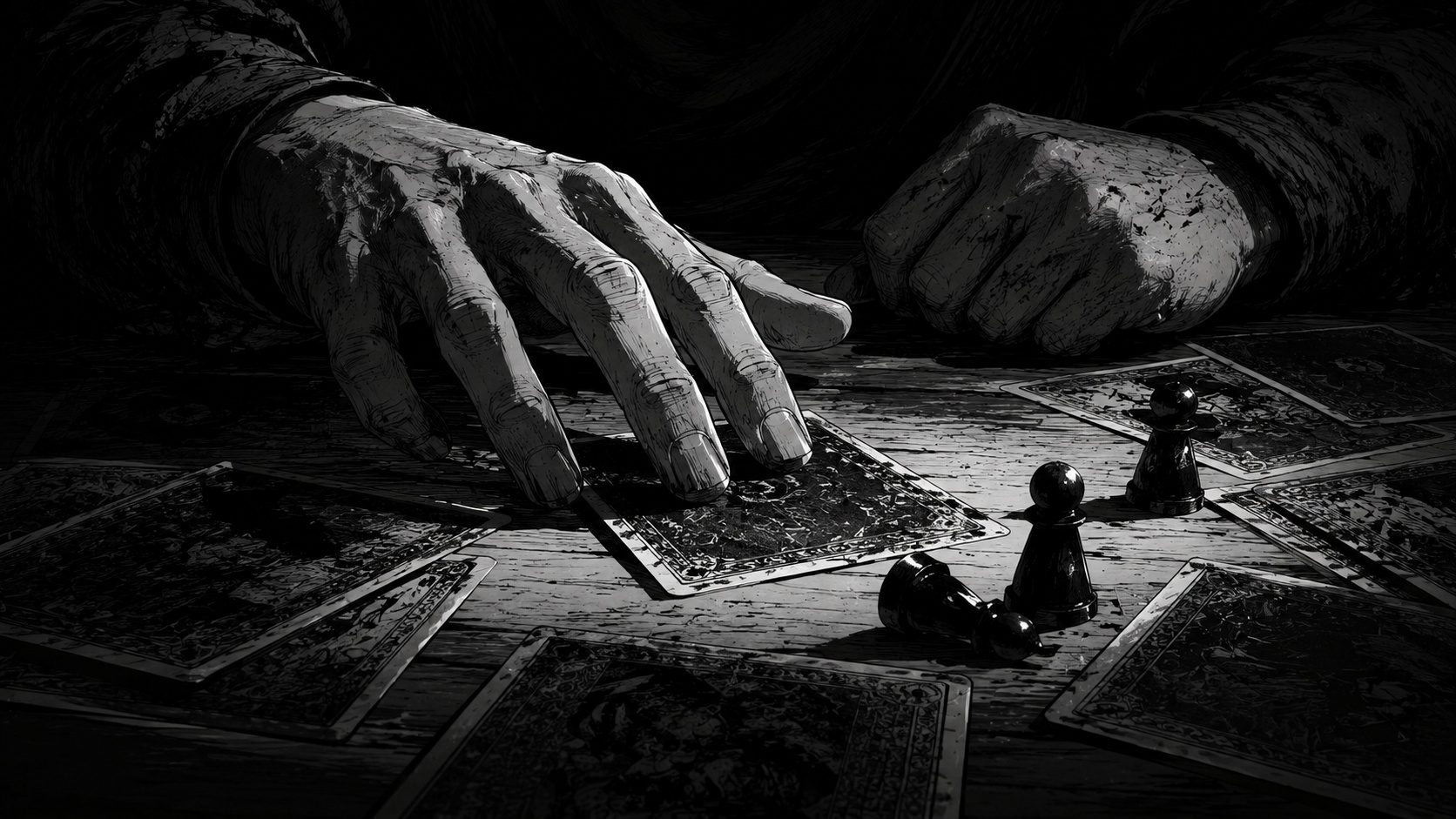
Chance is useful only when it exposes control
Randomness can make a story exciting, but too much randomness weakens it. If everything depends on luck, the reader stops caring about intelligence, planning or character growth. Seinen manga usually avoids that problem by making chance only one layer of the scene.
A coin toss, a card draw or a risky bet may look random on the surface. Underneath, the real drama is control: who shaped the situation before the game began, who understands the rules better, who notices the loophole, and who mistakes confidence for skill.
That balance matters. The reader needs uncertainty, but also needs to believe that the outcome comes from choices. A good high-stakes scene feels unpredictable without feeling arbitrary.
Why gambling motifs fit seinen so naturally
Gambling motifs are common in adult-oriented stories because they make abstract pressure visible. Debt, greed, shame, pride and desperation are difficult to show directly. A table, a bet, a final card or a last round gives those emotions a clear shape.
In manga, gambling does not have to be about a casino itself. It can appear as a school game, an underground contest, a business negotiation, a survival challenge or a private duel between two people who refuse to back down. The structure is the same: rules are set, stakes rise, and the character's weaknesses become harder to hide.
This is especially effective when the story refuses to romanticize winning. A victory can leave a character damaged, isolated or morally compromised. A loss can reveal honesty, intelligence or the first real moment of growth. In seinen, the result is often less important than what the risk exposes.
Where fiction and real gambling separate
In fiction, gambling scenes are controlled by the author. The reader can enjoy tension, fear and uncertainty from a safe distance because the risk belongs to the characters. That distance is what makes card tables, poker faces, roulette wheels and impossible bets useful as storytelling devices.
That is why gambling motifs in seinen are better understood as artistic tools. The point is not the table, the card or the machine itself, but the human reaction to pressure: fear, pride, the desire to control chance and the difficulty of stopping at the right moment.
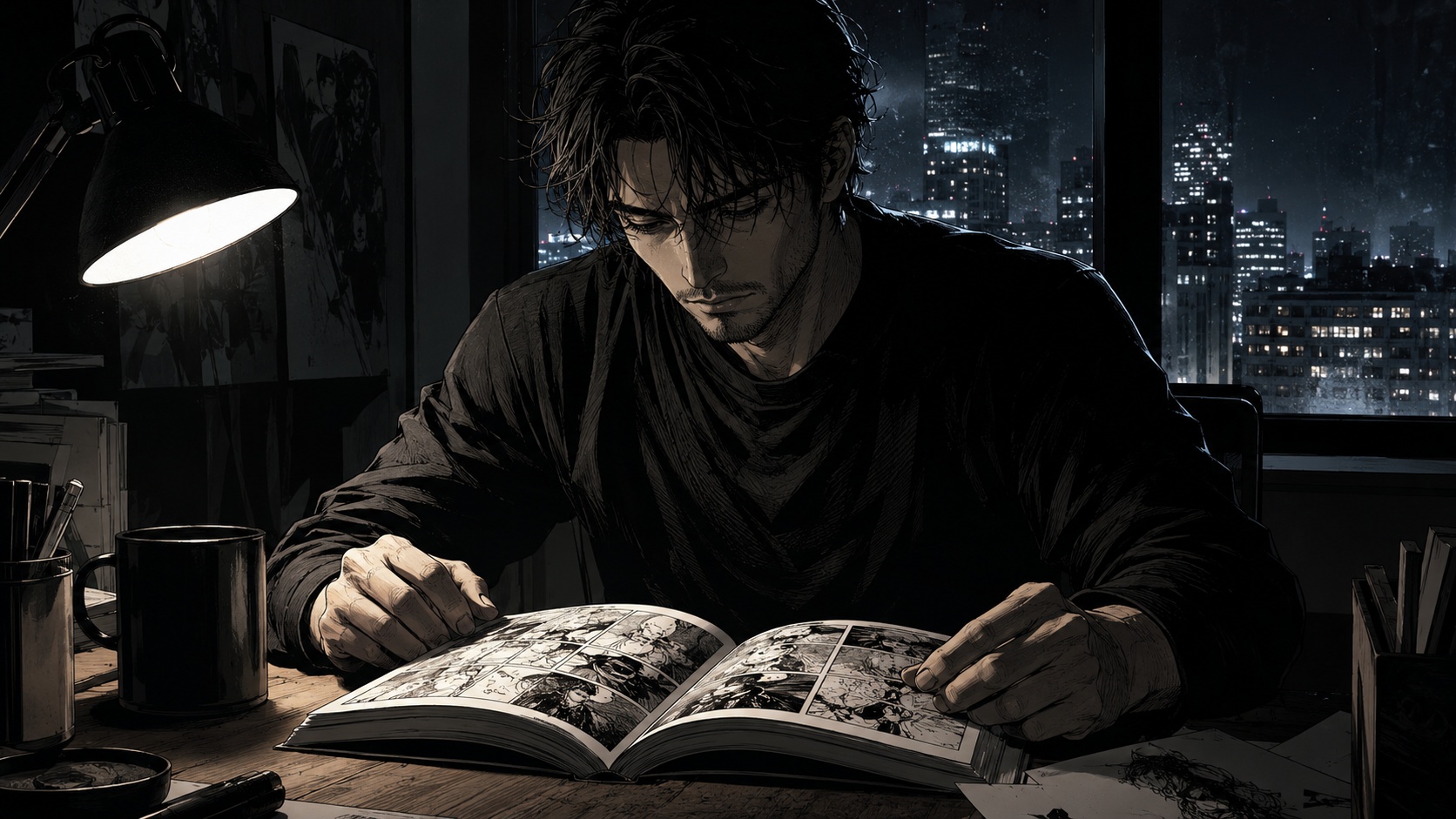
High stakes are not always about money
The strongest risk in seinen is not always financial. Sometimes the real stake is reputation, trust, identity or the right to make one more choice. A character may risk a secret, a friendship, a career or the image they have built for years.
This is why high-stakes stories can stay tense even without constant action. The reader understands that something fragile is on the table. If the character loses, the damage may not be visible immediately, but it will change how they see themselves and how others see them.
Money is simple to count. Pride, guilt and fear are harder to measure. Seinen often becomes interesting exactly at that point — when the visible stake is only a surface for something more personal.
What makes a risk scene work
A good risk scene usually has several parts working together:
- Clear rules — the reader must understand what can be won or lost.
- Emotional pressure — the character needs a reason to keep playing or negotiating.
- Limited information — someone knows more than the others, but not everything.
- A visible cost — every decision should feel like it changes the situation.
- A character reveal — the scene should show something hidden about the person under pressure.
When these pieces work together, the scene becomes more than a game. It becomes a test of patience, ego and perception. The reader follows the rules, but also watches the person behind the move.
Why readers return to high-stakes seinen
High-stakes seinen gives readers a particular kind of satisfaction. It offers tension without needing constant violence, strategy without becoming dry, and emotion without turning sentimental. The drama sits in decisions: when to speak, when to fold, when to trust, when to risk everything on one reading of another person.
That is why stories built around games, bets and psychological pressure remain memorable. They show characters at the moment when their usual masks stop working. In that moment, risk becomes more than a plot device — it becomes the quickest way to reveal who someone really is.